For years, marketers have treated search visibility as one of the most reliable routes to revenue.
Rank well.
Get clicked.
Win attention.
Build trust.
Convert demand.
That was the model.
It was not perfect, but it was relatively easy to understand. A buyer had a problem, searched Google, scanned the results, opened a few tabs, compared brands, checked reviews, looked at social proof, maybe watched a video, and eventually made a decision.
The journey was fragmented, but familiar.
That journey is starting to change.
AI surfaces are becoming the new layer between intent and decision.
ChatGPT, Google AI Mode, AI Overviews, Perplexity, Copilot, Gemini and other AI-led discovery experiences are not simply giving people links. They are synthesising answers, comparing options, summarising sentiment, recommending brands and, increasingly, helping users make decisions without needing to work through the traditional search journey themselves.
That changes the commercial value of being mentioned.
It changes the value of being cited.
It changes the value of being understood correctly.
And it changes what brands need to measure if they want to win in AI search.
The old buying journey is being compressed
The traditional digital buying journey was built around manual research.
A user might search for something like:
"best CRM for small business"
"top ecommerce agencies UK"
"best garden furniture brands"
"Shopify Plus agency for fashion brands"
"best project management software for agencies"
From there, they would usually look at a combination of search results, comparison articles, review sites, Reddit threads, YouTube videos, LinkedIn posts, social proof, brand websites and maybe a few paid ads.
The user was doing the synthesis.
They were gathering the evidence, comparing the options and building a view.
AI changes that.
Now the user can ask a much more specific question:
"Which CRM would be best for a 20-person B2B SaaS company with a small sales team, limited internal ops support, and a need for marketing automation?"
Or:
"Which ecommerce agency would you recommend for a UK furniture brand looking to expand into Germany?"
Or:
"What are the best garden furniture brands for someone who wants modern design, good reviews and reliable delivery in the UK?"
That is a very different kind of query.
It is conversational.
It is contextual.
It includes personal circumstances.
And the answer is not just a ranked list of blue links.
The AI surface does the comparison.
It pulls together signals from across the digital ecosystem.
It may consider brand websites, reviews, forums, social content, digital PR, product information, comparison pages, editorial content, structured data, third-party mentions and its own understanding of what the user is asking.
The old journey asked the user to find and evaluate the evidence.
The new journey increasingly asks the AI surface to do that for them.
That is a significant shift.
Trust is the commercial unlock
There is still a lot wrong with AI search.
Hallucinations still happen.
Answers can be incomplete.
Sources can be misread.
Citations can be inconsistent.
The same prompt can return slightly different answers.
Some platforms are better at source transparency than others.
And marketers should be careful not to pretend this is a solved problem.
It is not.
But the direction of travel feels clear.
The models are getting better.
The outputs are becoming more useful.
The hallucinations feel less frequent than they did in the earlier stages of mass adoption.
The experience is becoming more normalised.
And as trust builds, behaviour changes.
This is the key point.
Users do not need AI search to be perfect before it changes their behaviour. They only need it to be useful enough, often enough, for the habit to form.
Once that happens, the commercial impact becomes obvious.
If a user trusts an AI assistant to help them plan a holiday, choose software, compare products, shortlist agencies, explain technical topics, recommend tools or make purchasing decisions, then visibility inside that answer becomes commercially valuable.
Not just nice to have.
Not just brand awareness.
A route to revenue.
Because the brand that appears in the answer is closer to the decision than the brand waiting on page one of Google for a click that may never come.
Citation is the new commercial placement
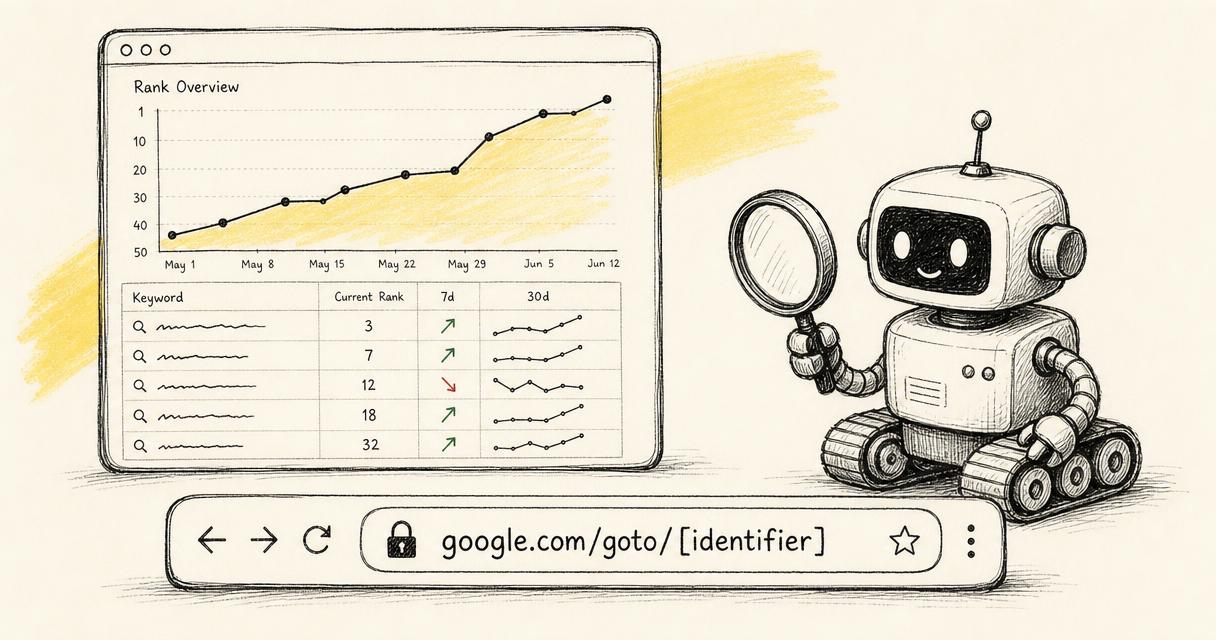
Traditional SEO trained marketers to think in rankings.
Position one.
Position two.
Position three.
Featured snippet.
Map pack.
Shopping result.
People also ask.
Review stars.
Schema.
That language will not disappear. Search still matters. Websites still matter. Technical SEO still matters. Content still matters.
But AI search adds a new layer.
The question becomes:
Are we cited?
Are we mentioned?
Are we recommended?
Are we summarised accurately?
Are we included in commercial-intent answers?
Are we included in informational answers?
Are we the first brand mentioned?
Are we the safe option?
Are we framed as premium, affordable, specialist, enterprise, risky, outdated, popular, innovative, niche or generic?
That is the new battleground.
Because a citation inside an AI-generated answer is not the same as a traditional ranking.
A traditional search result says:
Here is a page you might want to read.
An AI citation can say:
Here is a brand you should consider.
That is much closer to revenue.
Not all citations are equal
This is where marketers need to be careful.
A lot of the early conversation around AI visibility is too binary.
Are we showing up or not?
That is a starting point, but it is nowhere near enough.
A brand needs to understand the quality of its visibility.
There is a big difference between being cited as the leading option and being mentioned as an afterthought.
There is a big difference between being recommended for commercial queries and only being cited for generic informational ones.
There is a big difference between appearing in answers with positive sentiment and appearing in answers that describe your limitations.
There is a big difference between being the first brand named and being listed last after competitors.
There is a big difference between being cited as a specialist and being cited as one of many.
There is a big difference between an AI answer saying:
"Brand A is a strong choice for mid-market ecommerce brands because of its specialist experience, strong reviews and proven Shopify Plus work."
And:
"Brand A also appears in this category, although reviews are mixed and there is less evidence of recent work."
Both are citations.
Only one is commercially useful.
The future of AI visibility will not just be about presence.
It will be about prominence, context and sentiment.
The new AI visibility questions
This is where I think marketers need to get much sharper.
The questions are not just:
Do we rank?
Do we get traffic?
Do we have backlinks?
Do we publish enough content?
Those questions still matter, but they are no longer enough on their own.
The new questions are:
Are we being cited in AI answers for the prompts that matter commercially?
Are we being cited for informational prompts, comparison prompts, recommendation prompts and buying-intent prompts?
Are we being mentioned before or after our competitors?
Are we being framed positively, neutrally or negatively?
Are we seen as a category leader, a challenger, a budget option, a specialist or a generic provider?
Which sources are AI surfaces using when they describe us?
Are those sources accurate?
Are outdated articles shaping the answer?
Are poor reviews influencing sentiment?
Are competitors being cited more often?
Are competitors being described more favourably?
Which websites, review platforms, forums, publishers and social channels appear to influence the answer?
Are we visible in the places AI systems seem to trust?
That is a very different measurement framework.
It is not just SEO reporting.
It is not just brand tracking.
It is not just digital PR.
It is not just review management.
It is the intersection of all of them.
AI search will reward the wider digital ecosystem
One of the biggest mistakes brands will make is assuming AI visibility can be solved only on their own website.
It cannot.
Your website matters, but it is only one source of truth.
AI surfaces are likely to build answers from a much wider set of signals.
That includes review sites.
Comparison sites.
Forums.
Reddit threads.
YouTube videos.
LinkedIn posts.
Industry publications.
Digital PR coverage.
Product documentation.
Third-party directories.
Customer testimonials.
Case studies.
Structured data.
Marketplace listings.
Social proof.
Creator content.
Community discussions.
Support content.
The brand website still matters because it is the place where the brand can control its core facts, positioning, product information and proof.
But AI search is not only asking:
What does the brand say about itself?
It is also asking:
What does the wider web seem to believe about this brand?
That is the uncomfortable bit.
Because a lot of brands have spent years over-investing in their own controlled surfaces and under-investing in the ecosystem around them.
They have polished websites, but weak reviews.
Good messaging, but little third-party validation.
Plenty of content, but no community presence.
Strong case studies, but no independent mentions.
A clear proposition, but no share of voice in the conversations buyers actually trust.
That may become a problem.
If AI surfaces are trying to make useful recommendations, they will not only rely on brand claims. They will look for corroboration.
The brands that win will be the ones with consistent, credible and positive signals across the places AI systems look.
Reviews become more important, not less
Reviews are already important.
That is not new.
But AI changes how reviews may influence the journey.
In the traditional model, a user might go to Trustpilot, G2, Capterra, Google Reviews, Reddit or a marketplace and read the reviews manually.
In the AI-led model, the system may summarise that sentiment for them.
That means the user may never read 50 individual reviews.
They may simply ask:
"What do customers complain about most with this brand?"
Or:
"Which of these tools has the best reviews for customer support?"
Or:
"Summarise the common pros and cons of these three ecommerce platforms."
That is a different problem for marketers.
It is no longer enough to have a decent star rating.
Brands need to understand what the review corpus actually says.
Are customers praising support?
Are they complaining about pricing?
Are they repeatedly mentioning poor onboarding?
Are they happy with delivery?
Are returns a problem?
Are product quality issues appearing frequently?
Are old problems still influencing current perception?
Are competitors being praised for exactly the things you want to be known for?
AI surfaces make review sentiment more legible.
That is useful for users.
It is uncomfortable for brands.
And it makes customer experience much harder to separate from marketing.
Digital PR becomes machine-readable reputation
Digital PR has often been treated as a link-building channel.
Get coverage.
Get links.
Build authority.
Improve rankings.
That still has value.
But in an AI search world, digital PR has another role.
It becomes machine-readable reputation.
If authoritative publications, industry websites, expert roundups and relevant third-party sources consistently describe a brand in a certain way, that can shape how AI systems understand the brand.
This is not just about backlinks.
It is about entity understanding.
What is the brand known for?
Which category does it belong to?
Who is it compared with?
What problems does it solve?
Which products or services is it associated with?
Which experts mention it?
Which publications cite it?
Which proof points appear consistently?
Which claims are repeated across trusted sources?
That is why lazy digital PR will not be enough.
Generic coverage will have limited value.
The future value will come from coverage that strengthens the brand's association with the right category, the right problems, the right audience and the right commercial intent.
A brand does not just need to be mentioned.
It needs to be mentioned in the right context.
UGC and forums become unavoidable
Marketers like controlled messaging.
AI surfaces do not only care about controlled messaging.
That is why user-generated content, forums and community platforms matter.
Reddit, YouTube comments, LinkedIn discussions, specialist communities, niche forums and product-specific conversations can all influence how buyers think.
They may also influence how AI systems summarise market sentiment.
That creates a challenge.
Brands cannot fully control these spaces.
They can participate.
They can listen.
They can support.
They can answer questions.
They can improve the product.
They can fix recurring complaints.
They can encourage genuine advocacy.
But they cannot simply publish a press release and expect the market to agree.
That is probably a good thing.
AI search may make weak brands more exposed.
If the wider ecosystem is full of poor sentiment, thin proof, unhappy customers or unclear positioning, AI surfaces may compress that into a single answer.
That answer might not be flattering.
The brand website still matters
It would be a mistake to conclude that websites become less important.
They become important in a different way.
The brand website needs to become the clearest, most structured and most trustworthy source of truth about the business.
That means:
Clear positioning.
Clear product and service pages.
Clear comparison pages.
Clear use cases.
Clear pricing where appropriate.
Clear customer proof.
Clear case studies.
Clear FAQs.
Clear author and company information.
Clear schema.
Clear product data.
Clear review integration.
Clear update signals.
Clear evidence behind claims.
AI systems need to understand what a brand does, who it serves, why it is credible and when it should be recommended.
If the website is vague, the model has to infer more from third-party sources.
That is risky.
The problem with vague positioning used to be that users might not convert.
The new problem is that AI systems might not understand where to place you in the market at all.
That is a different kind of commercial risk.
AI citations will change content strategy
Content strategy has already been moving away from pure traffic volume.
AI will accelerate that.
The question will be less:
How do we create content that ranks for lots of keywords?
And more:
How do we create content that helps AI systems understand our authority, relevance and usefulness in the moments that matter?
That means content needs to be more precise.
More original.
More useful.
More structured.
More evidence-led.
More commercially connected.
A generic "ultimate guide" written to capture traffic is not enough.
Brands will need content that answers the questions AI systems are likely to synthesise.
Who is this product for?
Who is it not for?
How does it compare to alternatives?
What are the trade-offs?
What are the common objections?
What evidence supports the claims?
What use cases does it serve?
What outcomes has it delivered?
What do customers say?
What does the brand know that is genuinely useful?
That last question matters.
AI search will make average content feel even more average.
If a brand is publishing content that simply repeats what everyone else has already said, it gives AI systems no strong reason to cite it.
Original experience will matter.
Real data will matter.
Customer insight will matter.
Expertise will matter.
Specificity will matter.
The brands that publish useful, specific and evidence-backed content will have a much better chance of being understood and cited properly.
The difference between citation and recommendation
There is another distinction marketers need to understand.
Being cited is not always the same as being recommended.
A source can be cited because it supports a claim.
A brand can be mentioned because it exists in the category.
But a recommendation is stronger.
A recommendation means the AI surface is effectively saying:
Given this user's context, this brand is worth considering.
That is where revenue starts to appear.
For example, if someone asks:
"What are the best project management tools?"
That is broad.
But if they ask:
"What project management tool would suit a 15-person agency with multiple client retainers, recurring tasks, creative review cycles and a need for simple time tracking?"
The answer becomes more commercially meaningful.
The best brand citation is not always the one attached to the broadest query.
It is the one attached to the most specific, high-intent context.
That is where marketers need to focus.
Broad visibility is useful.
Commercial-context visibility is better.
Marketers need prompt-level visibility
Traditional SEO reporting is built around keywords.
AI visibility needs to be built around prompts.
Not one prompt.
Clusters of prompts.
Informational prompts.
Comparison prompts.
Commercial prompts.
Problem-aware prompts.
Use-case prompts.
Audience-specific prompts.
Competitor prompts.
Alternative prompts.
Location-based prompts.
Industry-specific prompts.
Objection-led prompts.
A brand should know how it appears across all of these.
For example, an ecommerce platform might track prompts like:
"What is the best ecommerce platform for a fast-growing fashion brand?"
"Should I use Shopify Plus or BigCommerce for international expansion?"
"What are the best ecommerce platforms for B2B wholesale?"
"Which ecommerce platform is easiest for a small team to manage?"
"What are the common complaints about Shopify Plus?"
"Which ecommerce platforms are best for multi-currency selling?"
The answer to each prompt matters differently.
Some prompts influence awareness.
Some influence consideration.
Some influence conversion.
Some expose risk.
Some reveal competitor strength.
Some show where the brand is misunderstood.
This is why AI visibility measurement needs to become more sophisticated very quickly.
The new reporting model
If I were building an AI search visibility report for a brand, I would not just report whether it appeared.
I would want to report:
Citation frequency.
Citation position.
Share of voice.
Prompt category.
Commercial intent.
Competitor co-citations.
Sentiment.
Source quality.
Source type.
Message accuracy.
Recommendation strength.
Entity associations.
Market and location variation.
Changes over time.
Negative themes.
Missing proof points.
Content gaps.
Review themes.
PR opportunities.
Community gaps.
That sounds like a lot, but that is the point.
AI search visibility is not one metric.
It is a system of signals.
And the brands that understand those signals earlier will have an advantage.
They will know where they are being misunderstood.
They will know which competitors are gaining ground.
They will know which sources are shaping perception.
They will know which reviews need attention.
They will know which content gaps are costing them recommendations.
They will know which markets, categories and use cases they are not being associated with.
That is where the commercial opportunity is.
This becomes a revenue conversation
One of the mistakes marketers will make is treating AI citations as an awareness metric.
It is more than that.
If AI surfaces influence which brands enter a buyer's consideration set, then AI visibility is a revenue issue.
If AI surfaces summarise brand sentiment before a user visits the website, then reputation is a revenue issue.
If AI surfaces recommend competitors for high-intent prompts, then content strategy is a revenue issue.
If AI surfaces misunderstand your positioning, then messaging is a revenue issue.
If AI surfaces use outdated or negative sources to describe you, then digital PR and review management are revenue issues.
This is the key shift.
AI search joins together disciplines that have often been managed separately.
SEO.
PR.
Content.
Brand.
Reviews.
Social.
Product marketing.
Customer experience.
Community.
Sales enablement.
Conversion.
All of them start to influence how the brand appears in AI-generated answers.
That makes AI visibility a board-level issue, not just a search marketing trend.
The winners will build an ecosystem, not just content
I do not think the brands that win in AI search will be the ones that simply publish more articles.
They will be the ones that build a more credible digital ecosystem.
That means the brand website is clear.
The content is useful.
The product information is structured.
The reviews are strong.
The customer experience supports the claims.
The digital PR reinforces the positioning.
The social proof is visible.
The community conversation is healthy.
The comparisons are fair and accurate.
The brand is mentioned in the right places.
The market understands what the brand is for.
That is hard to fake.
And that is why I think AI search could reward genuinely strong brands over time.
Not always.
Not perfectly.
There will be manipulation.
There will be spam.
There will be low-quality AI content.
There will be attempts to game citations.
That is inevitable.
But the long-term direction seems clear.
If AI systems are trying to help users make better decisions, then brands need to become easier to understand, easier to verify and easier to recommend.
My prediction
My prediction is that brand and person citations within AI surfaces will become one of the best routes to revenue over the next few years.
Not because traditional search disappears overnight.
It will not.
Not because websites stop mattering.
They will not.
Not because AI answers are perfect.
They are not.
But because user behaviour changes when trust builds.
And when users start trusting AI surfaces to help them decide, the brands cited inside those answers gain commercial advantage.
The next generation of search marketing will not only be about ranking pages.
It will be about shaping understanding.
Does the market understand what you do?
Do AI systems understand when to recommend you?
Do trusted sources support your claims?
Does customer sentiment reinforce your positioning?
Do reviews validate your promise?
Do forums and communities describe you fairly?
Do comparison pages include you?
Do AI answers frame you positively?
Are you visible for the prompts that lead to revenue?
Those are the questions marketers will need to answer.
Because in an AI-led buying journey, the moment of influence may happen before the click.
It may happen inside the answer.
And if that answer becomes the new consideration set, then citation becomes one of the most valuable forms of visibility a brand can earn.