
For most of the last 20 years, search marketing has been built around a relatively simple idea.
A user searches.
Google returns a list of results.
The user clicks.
The website earns attention.
The brand gets a chance to convert.
That model is not disappearing, but it is changing.
AI search is not just changing the way results are presented. It is changing what happens before the answer is even generated.
One of the most important concepts in this shift is query fan-out.
It sounds technical, and to be fair, it is. But the underlying idea is simple.
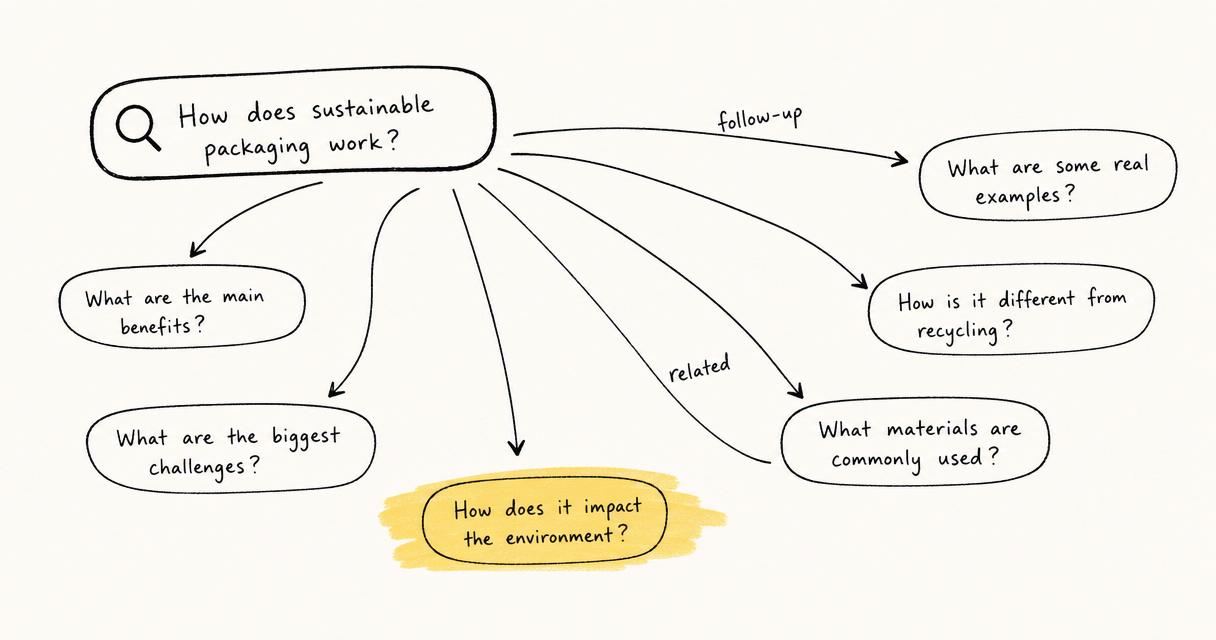
A user asks one question.
The AI system turns that question into several related searches.
It explores the topic from multiple angles.
It gathers information from different sources.
Then it synthesises the answer.
The user sees one response.
Underneath, the system may have carried out the equivalent of a mini research process.
That changes search.
It changes SEO.
It changes content strategy.
It changes Digital PR.
And it changes how brands need to think about visibility in AI surfaces.
Because in an AI search world, you are no longer only competing for the exact query the user typed.
You are competing across the supporting questions the model asks on their behalf.
What is query fan-out?
Query fan-out is the process of taking one search query and expanding it into multiple related searches.
Instead of trying to answer the original query directly from one set of search results, an AI search system breaks the query apart.
It identifies the subtopics.
It looks for related information.
It explores different angles.
It retrieves supporting evidence.
Then it brings the findings back together into one answer.
For example, someone might ask:
"Which ecommerce platform is best for a UK furniture brand expanding into Germany?"
A traditional search engine might return pages optimised for ecommerce platforms, international ecommerce, Shopify Plus, BigCommerce, Magento, or cross-border selling.
An AI search system using query fan-out could go further.
It might quietly explore related searches such as:
Best ecommerce platforms for international selling.
Shopify Plus multi-currency features.
BigCommerce international ecommerce capabilities.
Magento for complex catalogues.
German ecommerce payment methods.
Hreflang support for ecommerce websites.
Cross-border ecommerce tax considerations.
Furniture ecommerce platform examples.
Multi-language product catalogue management.
Ecommerce platforms for large product ranges.
Customer reviews of ecommerce platforms.
International checkout and payment expectations in Germany.
The user did not ask all of those questions.
But the system may need answers to them in order to provide a useful recommendation.
That is the important bit.
Query fan-out turns one query into a research map.
And that research map determines which sources, brands and entities are likely to influence the final answer.
Search is becoming less literal
Traditional SEO has never been purely literal, but it has often been planned in a keyword-led way.
Find the keyword.
Understand the volume.
Assess the difficulty.
Create or optimise the page.
Build authority.
Track rankings.
Improve performance.
That way of working still matters.
But query fan-out makes the relationship between keyword and visibility more complex.
If an AI system expands one query into multiple related queries, then the final answer may be influenced by pages that do not rank for the original query at all.
That is a very different environment.
A brand may be cited because it appears in the supporting evidence layer.
A competitor may be recommended because it is consistently visible across adjacent subtopics.
A publisher may influence the answer because it has the clearest explanation of one part of the problem.
A review site may shape the sentiment.
A forum thread may reveal common customer complaints.
A case study may provide the proof point.
A comparison article may define the shortlist.
The final answer is not built from one keyword.
It is built from a cluster of evidence.
That is why query fan-out matters so much.
It shows us that AI search is moving away from one-query, one-results-page thinking.
And towards multi-query synthesis.
The old search journey is being automated
Before AI search, the user did the fan-out manually.
They searched something broad.
Then they refined.
Then they opened tabs.
Then they searched competitors.
Then they checked reviews.
Then they looked at Reddit.
Then they asked LinkedIn.
Then they read comparison articles.
Then they went back to Google with a more specific query.
Then they made a shortlist.
That was the journey.
It was messy, but the user was in control of the synthesis.
AI search changes that.
The system starts doing some of that exploratory work for the user.
It breaks the topic down.
It pulls together evidence.
It summarises.
It compares.
It frames the options.
It may even recommend.
That is why AI search feels so different from traditional search.
It is not just a new interface.
It is the automation of the research process.
For marketers, this matters because the moment of influence moves upstream.
In the old model, you wanted to win the click.
In the new model, you may need to influence the answer before the user ever clicks anything.
Why query fan-out changes SEO
The immediate reaction to AI search is often to ask:
How do we rank in AI answers?
That is understandable.
But it is too narrow.
The better question is:
How do we become part of the evidence set an AI system uses to build the answer?
That is where query fan-out changes SEO.
If one user query creates several related searches, then visibility depends on more than one page, one keyword or one ranking.
It depends on whether the brand is visible, credible and well-understood across the wider topic cluster.
This means SEO has to become less obsessed with individual keyword ownership and more focused on topical coverage, entity clarity and evidence quality.
A brand does not just need a page targeting "best ecommerce agency".
It may need credible visibility across:
Ecommerce strategy.
Platform migration.
International SEO.
Shopify Plus.
Magento.
Conversion rate optimisation.
Product information management.
Cross-border ecommerce.
Customer reviews.
Case studies.
Digital PR coverage.
Industry commentary.
Comparison content.
Technical implementation.
Commercial outcomes.
That does not mean creating endless thin pages.
That would be the wrong lesson.
It means understanding the full set of questions that sit behind the user's original question, then building genuinely useful assets that answer them properly.
Query fan-out rewards depth.
Not in the sense of writing longer pages for the sake of it.
But in the sense of being present across the subtopics that help a user make a decision.
Ranking first may matter less than being repeatedly useful
In traditional SEO, position one was the prize.
It still matters.
But AI search complicates the idea of position.
If the system is exploring multiple related searches, then the brand that wins the final citation or recommendation may not be the brand that ranks first for the original query.
It may be the brand that appears consistently across the supporting searches.
That is a subtle but important change.
A brand could be second, third or fifth across several related subtopics and still become part of the final answer because the evidence is consistent.
Another brand could rank well for one broad query but be absent from the surrounding evidence layer.
In a traditional search results page, the broad ranking might win.
In an AI-generated answer, the stronger evidence pattern might win.
This is why I think marketers need to stop thinking only in terms of rankings and start thinking in terms of retrieval likelihood.
Will the system retrieve us?
Will it understand us?
Will it trust us?
Will it cite us?
Will it recommend us?
Will it frame us positively?
That is the new layer.
Query fan-out makes Digital PR more important
This is where query fan-out connects directly to Digital PR.
If AI search is pulling evidence from across the web, then third-party reputation becomes commercially important.
The brand website matters, but it is not enough.
A brand can say whatever it wants about itself.
The wider web provides corroboration.
This is where Digital PR becomes machine-readable reputation.
If a brand is consistently mentioned in relevant publications, expert commentary, comparison pieces, interviews, data studies and industry reports, those mentions may help AI systems understand what the brand is known for.
Not just because of links.
Because of association.
Because of context.
Because of repeated entity signals.
Because of the way independent sources describe the brand.
Query fan-out increases the number of routes through which a brand might be discovered.
That means more opportunities to be included, but also more opportunities to be absent.
If the model fans out into competitor comparisons, are you there?
If it fans out into review sentiment, are you visible?
If it fans out into expert commentary, are you cited?
If it fans out into industry publications, are you mentioned?
If it fans out into common complaints, what does it find?
If it fans out into use-case-specific recommendations, does your brand have any evidence?
This is why Digital PR cannot just be link acquisition anymore.
It needs to build a clear external evidence trail.
Query fan-out rewards clear entity understanding
AI systems need to understand entities.
People.
Brands.
Products.
Categories.
Services.
Locations.
Industries.
Use cases.
Problems.
The clearer the entity, the easier it is to retrieve and place in context.
That sounds obvious, but a lot of brands make this difficult.
They use vague positioning.
They change their language constantly.
They describe themselves differently across their website, social profiles, press coverage, directory listings and sales material.
They try to be relevant to too many audiences at once.
They use broad claims like "transforming growth" or "reimagining customer experience" without saying anything specific.
That kind of language was already weak for humans.
It is even weaker for machines.
Query fan-out puts pressure on brands to be understandable.
What are you?
Who do you serve?
What problem do you solve?
What category do you belong to?
Who are your competitors?
What proof do you have?
What are you genuinely known for?
When should you be recommended?
When should you not be recommended?
If the answers to those questions are not clear across the web, AI systems may struggle to place you in the right answers.
The danger is not just that you are invisible.
The danger is that you are misunderstood.
The prompt is not the only thing that matters
One of the mistakes marketers will make is taking AI prompts too literally.
They will ask:
"How do we appear for this exact prompt?"
That matters, but it is incomplete.
Because query fan-out means the exact prompt is only the starting point.
The more useful exercise is to ask:
What would the model need to know in order to answer this prompt well?
Take a commercial prompt like:
"Which CRM is best for a growing B2B SaaS company with a small sales team and limited internal operations support?"
The model may need to understand:
Which CRMs are suitable for B2B SaaS.
Which are easiest to implement.
Which have strong marketing automation.
Which are better for small teams.
Which have good onboarding.
Which are expensive to maintain.
Which have strong integrations.
Which are recommended by users.
Which are criticised in reviews.
Which are used by similar companies.
Which comparison pages are credible.
Which vendors have recent coverage.
Which experts discuss CRM implementation.
That is the real opportunity.
The original prompt is one door.
Query fan-out opens the surrounding rooms.
Marketers need to optimise for the whole building.
Content strategy needs to move from keywords to question systems
Keyword research is not dead.
But it is no longer enough.
If query fan-out is part of how AI search builds answers, then content strategy needs to become more question-led and system-led.
That means understanding the network of questions behind a topic.
For example, a brand wanting to be visible for international ecommerce queries should not only create a page called:
"International ecommerce services"
It should understand the connected questions:
Which countries should ecommerce brands expand into first?
How should brands structure international URLs?
When should you use subfolders, subdomains or ccTLDs?
How does hreflang work for ecommerce?
How should product feeds be localised?
What payment methods matter by market?
How should returns be handled internationally?
How do shipping costs affect conversion?
How do brands localise product imagery?
How does AI help with ecommerce localisation?
What are the risks of AI-translated content?
What does international SEO cost?
Which platforms support multi-market ecommerce?
Those questions are not random.
They form the evidence network around the commercial query.
A strong content strategy should help the brand answer that network better than anyone else.
Not with generic AI-generated pages.
Not with thin FAQs.
Not with recycled thought leadership.
With useful, specific, experience-led content that helps both humans and machines understand the brand's expertise.
Query fan-out changes how we think about topical authority
Topical authority has been discussed in SEO for years.
The basic idea is that a site becomes more credible when it covers a subject in depth.
Query fan-out makes that concept more practical.
If AI systems are exploring subtopics to answer complex questions, then brands with strong coverage across those subtopics may have an advantage.
But this should not be misunderstood.
Topical authority is not about publishing hundreds of average articles.
It is about building a coherent body of work.
A body of work that answers important questions.
A body of work that connects ideas properly.
A body of work that reflects real expertise.
A body of work that third-party sources can validate.
A body of work that makes it clear what the brand or person should be trusted on.
For a person, that might mean becoming consistently associated with AI search, Digital PR, demand generation and ecommerce growth.
For a brand, it might mean becoming consistently associated with a category, audience and commercial problem.
The important word is consistently.
Query fan-out increases the value of being visible across the whole topic, not just one page.
The risk of shallow coverage
There is a bad version of this.
And it is already obvious where it goes.
Brands will try to reverse-engineer fan-out queries and create content for every possible variation.
Thousands of pages.
Thin answers.
AI-generated explainers.
Generic comparison articles.
Low-quality "best of" lists.
Pages written for machines, not people.
This will create a lot of noise.
It may work for a while in some places.
But it is not a durable strategy.
Because AI search does not just need more content.
It needs better evidence.
Better explanations.
Better sources.
Better proof.
Better experience.
Better corroboration.
The brands that win should not be the ones that simply cover the most queries.
They should be the ones that answer the right questions with the most credibility.
That is a very different mindset.
How query fan-out affects commercial intent
Commercial queries are where this becomes especially important.
When someone asks a traditional search engine for "best X", the results are often dominated by comparison sites, affiliate pages, review platforms and listicles.
When someone asks an AI surface for the same thing, the system may still use those sources, but it can also incorporate more context.
The user can specify budget, location, company size, preferences, constraints, experience level, existing tools, risk tolerance or previous interactions.
That creates more specific commercial intent.
For example:
"Best project management software" is broad.
"Best project management software for a 20-person creative agency that needs retainers, recurring tasks, client approvals and simple time tracking" is much more commercially useful.
To answer that well, the system may fan out into:
Project management tools for agencies.
Software with time tracking.
Client approval workflow tools.
Agency retainer management.
Reviews from creative agencies.
Alternatives to Asana for agencies.
ClickUp vs Monday for agencies.
Best tools for recurring client work.
The final recommendation may be shaped by sources across that whole set.
That means commercial visibility becomes more context-dependent.
A brand might not be the best general answer.
But it might be the best answer for a specific use case.
That is where the revenue opportunity is.
Marketers need to understand not just the broad category prompts, but the high-intent context prompts where their brand should genuinely win.
This is not just SEO. It is positioning.
Query fan-out exposes weak positioning.
If a brand does not know what it wants to be known for, it will struggle to create the evidence needed to be retrieved for the right answers.
This is why AI search strategy cannot sit only with SEO teams.
It needs input from brand, product marketing, sales, customer success, PR, content and leadership.
The business needs to decide:
Which categories do we want to own?
Which customer problems do we solve best?
Which competitors should we be compared against?
Which use cases are we strongest for?
Which proof points support that?
Which sources should validate it?
Which questions should we be the answer to?
That is positioning.
SEO can help make it discoverable.
Digital PR can help make it credible.
Content can help make it useful.
Reviews can help make it trusted.
Sales can help make it commercially sharp.
But the strategic decision has to come first.
What marketers should do now
The first step is to stop thinking about AI search as a single-output visibility problem.
It is not enough to check whether your brand appears for a few prompts.
You need to understand the question system behind those prompts.
Start with the commercial questions that matter.
The questions your buyers are likely to ask.
The questions your sales team hears all the time.
The questions that appear in comparison calls.
The questions that sit before budget approval.
The questions that reveal a buyer is moving from curiosity to consideration.
Then break those questions down.
What would an AI system need to know to answer this well?
Which subtopics would it explore?
Which competitors would it compare?
Which reviews would it look at?
Which publications would it trust?
Which technical considerations matter?
Which proof points would make the answer stronger?
Which objections need to be addressed?
Which entities need to be connected?
That becomes your fan-out map.
Once you have that map, you can audit visibility properly.
Do you have content that answers those questions?
Is it any good?
Is it indexable?
Is it structured clearly?
Is it supported by external evidence?
Are third-party sources saying the same thing?
Are reviews reinforcing or undermining the message?
Are competitors stronger in specific subtopics?
Are you invisible where you should be visible?
Are AI systems misunderstanding your position?
This is the work.
It is less glamorous than chasing the latest AI search hack.
But it is much more useful.
A simple query fan-out framework
For practical planning, I would break query fan-out into six layers.
1. The original prompt
This is what the user asks.
It might be broad, specific, commercial, informational, comparative or problem-led.
Example:
"Which ecommerce agency should we use for international expansion?"
2. The hidden sub-questions
These are the questions the system may need to answer before it can respond properly.
Who has international ecommerce experience?
Who understands technical SEO?
Who has worked with similar brands?
Who has strong case studies?
Who is credible in the UK market?
Who understands localisation?
Who has positive reviews?
Who is mentioned by trusted sources?
3. The evidence sources
These are the places the system may retrieve information from.
Brand websites.
Case studies.
Review platforms.
Industry publications.
Digital PR coverage.
Directories.
Comparison articles.
Forums.
Social profiles.
YouTube.
Podcasts.
Product documentation.
4. The entity signals
These are the associations that help the system understand the brand.
Brand name.
Founder name.
Category.
Services.
Industries.
Locations.
Clients.
Partners.
Technologies.
Awards.
Expertise.
Competitors.
5. The sentiment layer
This is how the brand is framed.
Trusted.
Specialist.
Expensive.
Generic.
Enterprise.
Niche.
Innovative.
Popular.
Poorly reviewed.
Strong for a specific use case.
Weak for another.
This matters because being mentioned is not the same as being recommended.
6. The final answer
This is what the user sees.
By the time the answer appears, the commercial influence may already have happened.
If your brand is included, framed positively and supported by credible sources, you have a chance.
If not, the user may move forward without ever knowing you existed.
Why fan-out makes brand building measurable
Brand has often been hard to connect directly to search performance.
Query fan-out starts to close that gap.
If AI systems are drawing on the wider digital ecosystem, then brand signals become part of search visibility.
Not in a vague way.
In a measurable way.
Are you mentioned in trusted sources?
Are you associated with the right category?
Are you visible in comparison content?
Are you included in expert discussions?
Are customers reviewing you positively?
Are forums describing you accurately?
Are your founders or spokespeople connected to the right topics?
Are your proof points repeated beyond your own website?
That is brand building.
But it is also search infrastructure.
This is why the old separation between brand and performance feels increasingly outdated.
In AI search, reputation becomes retrievable.
And retrievable reputation can influence revenue.
The reporting model needs to evolve
Traditional SEO reporting is still useful.
Rankings.
Clicks.
Impressions.
CTR.
Conversions.
Technical health.
Content performance.
Backlinks.
But AI search needs additional reporting.
Brands need to understand:
Which prompts trigger citations.
Which subtopics influence those prompts.
Which competitors appear.
Which sources are cited.
Which source types dominate.
Which entity associations are strongest.
Which sentiment appears.
Which answers are commercially useful.
Which prompts show negative framing.
Which content gaps appear repeatedly.
Which PR opportunities could strengthen the evidence layer.
Which reviews are influencing perception.
Which markets or locations change the answer.
This is not easy.
But neither was SEO when it matured.
The early stage of any channel is messy.
Then measurement catches up.
Query fan-out gives us a clearer way to think about what should be measured.
Not just visibility for a keyword.
Visibility across the research process.
The uncomfortable truth
The uncomfortable truth is that query fan-out will expose a lot of weak marketing.
Thin content will be exposed.
Vague positioning will be exposed.
Weak reviews will be exposed.
Lack of third-party validation will be exposed.
Generic Digital PR will be exposed.
Brands that rely too heavily on their own claims will be exposed.
Because AI search is not only asking what a brand says about itself.
It is trying to understand what the wider evidence suggests.
That is uncomfortable, but useful.
It should push marketers to build stronger foundations.
Better content.
Better proof.
Better positioning.
Better customer experience.
Better external validation.
Better technical infrastructure.
Better market understanding.
That is not a bad thing.
My prediction
My prediction is that query fan-out will become one of the most important concepts in search strategy over the next few years.
Not because everyone needs to use the phrase.
Most people probably will not.
But because it explains the direction of travel.
Search is moving from retrieval to synthesis.
From keywords to questions.
From rankings to evidence.
From blue links to generated answers.
From isolated pages to connected reputation.
From user-led research to AI-assisted decision-making.
That means marketers need to think differently.
The brands that win will not simply be the ones that rank for the obvious keywords.
They will be the ones that are consistently useful, credible and well-understood across the subtopics that sit behind commercial intent.
They will build content that answers real questions.
They will earn Digital PR that strengthens their authority.
They will manage reviews because sentiment matters.
They will structure their websites so machines can understand them.
They will connect brand, SEO, PR, content and customer experience into one reputation system.
They will stop asking only:
"Do we rank for this keyword?"
And start asking:
"When AI systems research this problem, are we part of the evidence?"
That is the shift.
Query fan-out means one search is no longer just one search.
It is a hidden research process.
And the brands that understand that process early will have a significant advantage in the next era of search.